
MENU
MENU
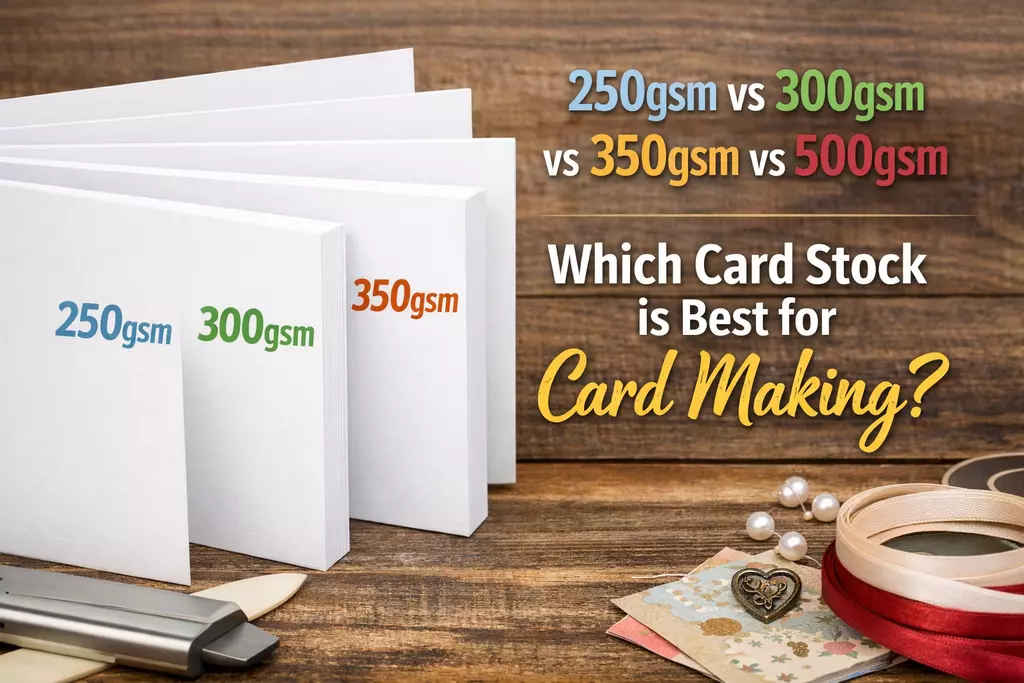
If you’ve ever searched “what cardstock weight should I use?" you’re not alone. Choosing between 250gsm, 300gsm, 350gsm and 500gsm can feel confusing — especially if you’re selling greeting cards online or printing at home. This guide breaks down exactly which weight works best for crafters and professional card makers.
Best GSM at a Glance:
Everyday cards → 300gsm
Budget-friendly / printer-safe → 250gsm
Invitations & premium lines → 350gsm
Luxury statement pieces → 500gsm
GSM stands for grams per square metre. In plain English: it’s a measure of how heavy the card is. Higher GSM usually means thicker, sturdier card—but finish, texture, and construction matter too.
For card makers, GSM is less about the number and more about what the finished card does: Does it feel premium? Does it stand nicely? Does it print cleanly? Does it fold without cracking?
If you’re selling cards online (Etsy, Shopify, fairs, wholesale, Amazon—wherever), consistency is everything. Pre-scored blanks help you get:
In other words: your time is worth more than wrestling a ruler and bone folder at 11pm.
If you only read one section, read this:
250gsm is a solid choice if you’re prioritising ease of printing and cost-effective production. It’s lighter than 300gsm, but still feels “card”, not “leaflet”.
If you’re doing lots of designs, test prints, or want a more flexible stock for layering and embellishments, 250gsm can be a smart pick.
Try: 250gsm A5 Pre-Scored White Card Blanks (folds to A6) for a classic greeting card size that’s easy to work with.
Best for: everyday cards, practice runs, lighter ranges, printer-sensitive setups.
300gsm is the weight most people mean when they say, “I want it to feel premium.” It’s thick enough to feel high quality, but still generally workable for crafting and printing.
If you want a proven crowd-pleaser, start here: 148mm Square 300gsm Pre-Scored Card Blanks . This format is a customer favourite because it feels substantial, folds cleanly, and suits everything from modern greetings to event stationery.
Best for: professional card ranges, selling online, premium everyday cards, most designs.
If 300gsm feels premium, 350gsm feels proper. You get more rigidity and a more luxurious “in-hand” feel, which is perfect for wedding stationery, milestone events, and higher-priced card lines.
A great option in this weight is: 350gsm A5 Pre-Scored White Card Blanks (folds to A6) . It’s an easy upgrade path when you want to push your range upmarket.
Best for: invitations, premium ranges, display cards that need to stand proudly.
500gsm is for when you want the reaction to be: “Oh wow, this feels expensive.” It’s thick, bold, and fantastic for premium stationery, portfolios, and standout event pieces.
If you’re working big and premium, take a look at: 500gsm A3 Pre-Scored White Card Blanks (folds to A4) . You get a large format plus serious thickness—ideal for high-impact designs.
Best for: luxury stationery, statement invitations, premium prints, bold branding pieces.
| Weight | Feel | Best for | Watch-outs |
|---|---|---|---|
| 250gsm | Lighter “card” feel | Everyday cards, practice runs, printer-friendly projects | Less rigid; not as “luxury” in-hand |
| 300gsm | Premium, balanced | Most card ranges, selling online, greetings & stationery | Very thick ink coverage may need printer testing |
| 350gsm | Sturdier, “special occasion” | Invitations, premium lines, display cards | Some home printers may struggle—test first |
| 500gsm | Heavyweight, luxury | Statement stationery, premium invitations, large format | Often better for robust printers/pro setups |
If you sell cards online, your GSM choice affects more than aesthetics:
A simple strategy many sellers use: 300gsm as the core range, then 350gsm/500gsm as premium upgrades.
Not always. Thicker can feel more premium, but it can also be harder to print on and may be overkill for some designs. Match the weight to the purpose: everyday cards don’t always need heavyweight stock.
For most greeting cards, 300gsm is the best all-rounder. If you want a more premium feel, move up to 350gsm.
350gsm is a great choice for wedding stationery and special occasions. If you want a luxury, statement feel (and your printer setup can handle it), consider 500gsm.
You don’t need them—but if you want clean folds, fewer rejects, and faster production (especially for batch making), pre-scored is the sensible option.
If you’re building a range, start with a dependable core weight (hello, 300gsm) and expand upward for premium lines. And if you’re unsure, order a small quantity to test with your printer and your process before committing to bigger packs.
Note: Colour, quality and weight can display differently on screens. If you're printing at home, always check your printer’s specifications before purchasing—compatibility with thicker card can’t be guaranteed. If you’re unsure, it’s best to order a small quantity first and test.