
MENU
MENU
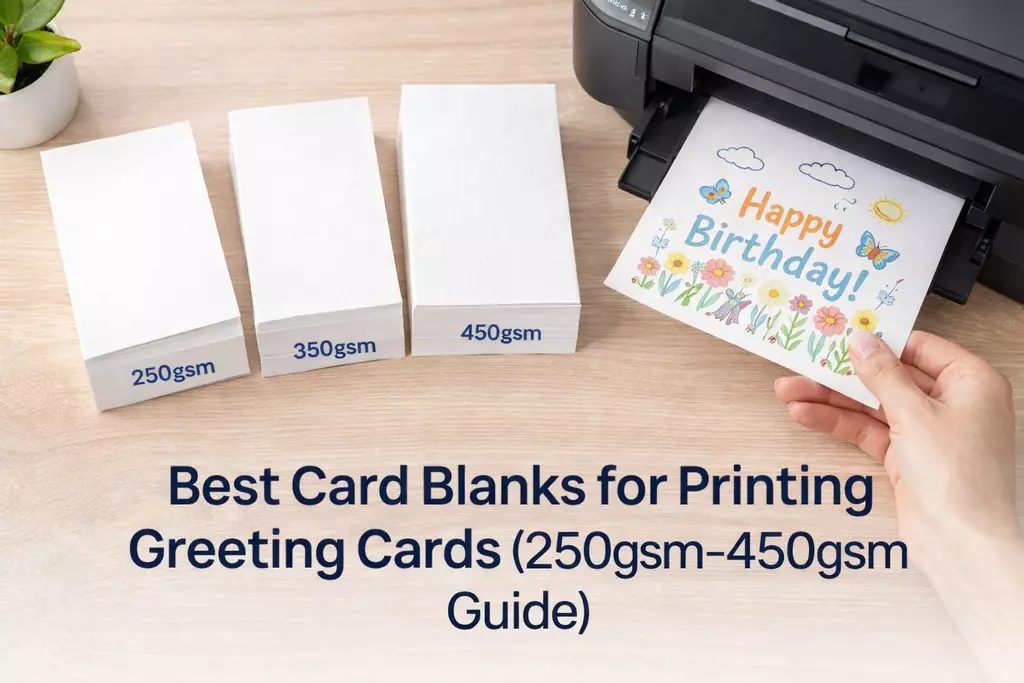
This guide explains the best card blanks for printing greeting cards, comparing popular cardstock weights like 250gsm, 300gsm, 350gsm and 450gsm so you can choose the right option for your printer and card designs.
Quick answer: For most greeting cards, 300gsm pre-scored card blanks are the sweet spot. They feel sturdy, print well on many home printers, and fold neatly. If you want something a bit more premium, 350gsm card blanks are a strong step up. If you want cards with real “ooh, that feels fancy” energy, go for 450gsm card blanks.
If you've ever loaded card into your printer, pressed print, and waited to see whether it produces a beautiful greeting card or a mechanical tantrum, you're not alone.
Choosing the right card blanks for printing greeting cards matters more than most people think. The wrong card can jam, crack on the fold, look flimsy, or make your printer sound like it's chewing gravel. The right card, on the other hand, gives you clean folds, crisp print results, and cards that actually feel worth sending.
Whether you're making cards for birthdays, weddings, events, Etsy orders, or your own handmade card business, the trick is choosing the right combination of card weight, size, and format.
A good place to start is with a full range of pre-scored white card blanks, so you can compare sizes and weights properly instead of guessing and hoping for the best.
You can print on flat sheets and fold them yourself. You can also cut your own fringe with kitchen scissors. One of those choices is sensible. The other leads to regret.
Pre-scored card blanks are already creased, which means they fold cleanly and neatly without cracking the surface. That gives your finished cards a more professional look and saves you time, especially if you're printing more than one or two.
If you're printing greeting cards at home, pre-scored blanks make life easier. That alone is enough reason to love them.
Card weight is measured in GSM, which stands for grams per square metre. In plain English, higher GSM usually means thicker, sturdier card.
For greeting cards, the most useful range is usually 250gsm to 450gsm. Lighter than that starts to feel more like heavy paper. Heavier than that starts entering “make sure your printer can actually cope” territory.
| Card Weight | Best For | Feel |
|---|---|---|
| 250gsm | Lightweight greeting cards, test prints, larger runs | Light but still card-like |
| 300gsm | Standard greeting cards | Sturdy and printer-friendly |
| 350gsm | Premium greeting cards and invitations | Noticeably thicker and more substantial |
| 450gsm | Luxury cards and high-end stationery | Heavyweight and premium |
If your printer is a bit fussy, or you're printing in volume, 250gsm A4 pre-scored white card blanks that fold to A5 are a sensible starting point.
They still feel like proper card, but they're easier for many home printers to feed through. That makes them useful for test runs, simple greeting cards, or designs where you want a lighter feel.
250gsm is a good choice if:
It may not scream luxury, but it does quietly get the job done without drama. Sometimes that is exactly what you want.
For most people, 300gsm A4 pre-scored white card blanks that fold to A5 are the best all-round option for printing greeting cards.
They strike the ideal balance between thickness and printability. They feel properly substantial, fold neatly, and many home printers can handle them without behaving like you've personally insulted them.
300gsm is ideal for:
If you're unsure where to begin, start with 300gsm. It's the most versatile option and the safest recommendation for most card makers.
If you want your cards to feel a bit more high-end, 350gsm A4 pre-scored white card blanks that fold to A5 are an excellent upgrade.
This weight gives cards a thicker, more luxurious feel without immediately tipping into printer-battle territory. For many people, 350gsm is where cards start to feel genuinely premium.
350gsm works especially well for:
If 300gsm is the dependable all-rounder, 350gsm is the one that turned up wearing a blazer.
If you want maximum thickness and a seriously premium feel, 450gsm A4 pre-scored white card blanks that fold to A5 are the heavyweight option.
These are ideal when you want the card itself to make an impression before anyone even reads what's printed on it.
450gsm is perfect for:
The only catch is that not every home printer will handle 450gsm happily, so always test first. Beautiful card is wonderful. Beautiful card wedged sideways inside a printer is less wonderful.
Weight matters, but size matters too. The best size depends on what you're making, how much design space you need, and what sort of envelope or presentation you're going for.
A4 card blanks that fold to A5 are ideal if you want a larger finished greeting card with plenty of room for bold designs, photos, inserts, or longer messages.
They're especially useful for:
If you want a more modern look, square cards are a strong option. They work particularly well for photo cards, illustrated designs, and cards with a more contemporary layout.
These 148mm square 300gsm pre-scored cards are great for everyday use, while 148mm square 350gsm pre-scored cards add a more premium feel. If you want your square cards to feel seriously substantial, 148mm square 450gsm pre-scored cards are the heavyweight choice.
Square card blanks are especially popular for:
Even the best card blanks in the world won't help much if your printer reacts to them like you've tried to feed it a slice of toast.
To improve your results when printing greeting cards at home:
Many home printers are comfortable with 250gsm and 300gsm. Some will happily handle 350gsm. Fewer will enjoy 450gsm. Printers, like people, all have their limits.
| If You're Making... | Best Weight |
|---|---|
| Everyday greeting cards | 300gsm |
| Large print runs or easy-feeding cards | 250gsm |
| Premium cards and invitations | 350gsm |
| Luxury statement cards | 450gsm |
For most greeting cards, 300gsm to 350gsm cardstock is the best choice. 300gsm is the best all-rounder, while 350gsm gives a more premium feel.
Yes, many home printers can print on card blanks, especially in the 250gsm to 300gsm range. Heavier card may require a rear feed tray or a printer designed for thicker media.
Yes. Pre-scored card blanks fold more cleanly, look more professional, and save time. They're usually the better choice for greeting cards and invitations.
Absolutely. Square card blanks are popular for modern greeting card designs, photo cards, and boutique stationery. They offer a balanced layout and a more contemporary look.
If you want greeting cards that print well, fold neatly, and actually feel like proper cards rather than slightly ambitious paper, choosing the right blank matters.
For most people, 300gsm pre-scored card blanks are the best place to start. If you want something more substantial, move up to 350gsm. If you want full luxury mode, go for 450gsm.
And if you want to compare all your options in one place, browse the full range of pre-scored white card blanks here.
If you're still deciding between different card weights, you may also find our guide helpful: 250gsm vs 300gsm vs 350gsm vs 500gsm Cardstock – Which Weight Is Best for Card Making? | Mankey Monkey